
Building a Cloud-Native Inmate Communication Platform for U.S. Correctional Facilities
How we rebuilt a correctional telecom provider's aging PBX infrastructure into a platform handling 50,000+ concurrent calls.
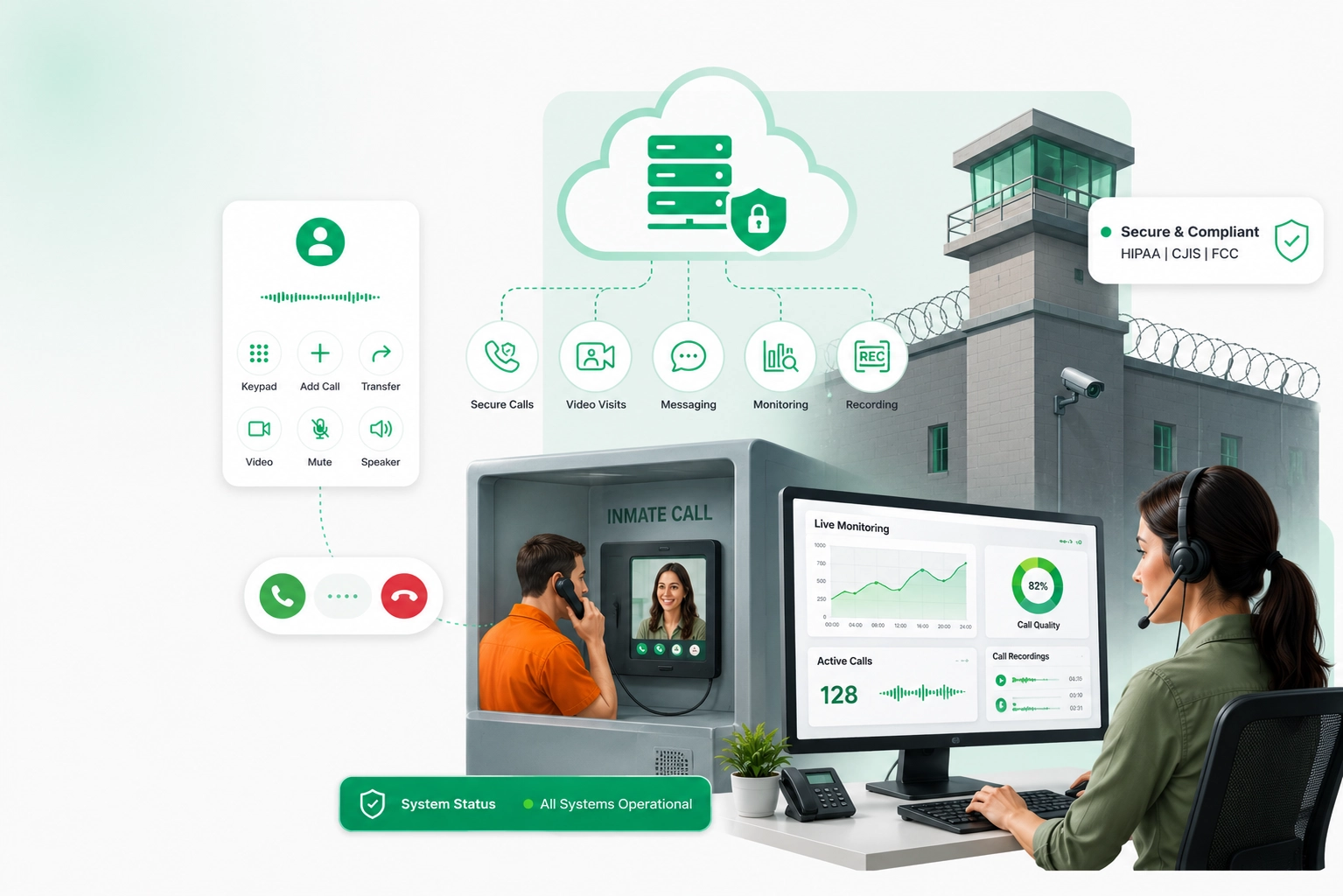


The Challenge
Three problems pushed the client to rebuild from scratch.
Legacy system constraints
Each facility ran its own PBX appliance. Adding a new location meant weeks of hardware provisioning, manual configuration, and on-site setup. The support burden was growing faster than the team could hire for, and every facility had slightly different requirements that the hardware couldn't adapt to without physical changes.
High concurrency demands
Call volumes were spiking past what the legacy hardware could handle. During peak hours, the system was either dropping calls or running at expensive over-provisioned capacity to avoid outages. The facility count kept climbing, and neither approach was going to hold.
Security and compliance gaps
Correctional facilities have some of the tightest call monitoring requirements in U.S. telecommunications. Recording, allowed-number restrictions, investigator access, audit trails. The legacy setup spread all of that across multiple systems with no single point of visibility. Every time a new facility came online with its own compliance rules, someone had to manually configure the hardware to match. That process was slow, and it was getting slower.
The Solution
We rebuilt the platform from scratch on FreeSWITCH, Kamailio, and WebRTC, running in Docker containers orchestrated by Kubernetes on AWS.
Containerized deployment on Kubernetes
FreeSWITCH and Kamailio run inside Docker containers managed by Kubernetes on AWS. When a new facility comes online, the team deploys through a pipeline instead of shipping hardware. Scaling happens automatically during call spikes. If a node fails, Kubernetes replaces it without anyone picking up a phone. What used to take weeks now takes hours.
Hybrid SIP and WebRTC architecture
Kamailio handles SIP routing at the edge. WebRTC powers the browser-based inmate applications, which means no native app installations on facility tablets. For locations still running analog phones, SIP gateways bridge the old hardware into the new platform. Both paths hit the same backend, which simplified the routing logic more than we expected it to.
Compliance and recording controls
Every call passes through compliance checks before it connects. Conversations are recorded and stored behind strict access controls. Facility administrators see their own data and nothing else. Investigators get a separate portal with its own audit trail. The compliance configuration is per facility, so onboarding a location with different rules doesn't mean touching the rest of the platform.

99.999% uptime
Platform Availability

50,000+ simultaneous calls
Concurrent Call Capacity

60% reduction post-migration
Operational Overhead
Ready to scale your VoIP infrastructure?
Let our experts architect a high-performance, resilient communication platform tailored to your specific requirements.
Get Started Today